
HS Tote Bag Fillers for Granular and Powder Products
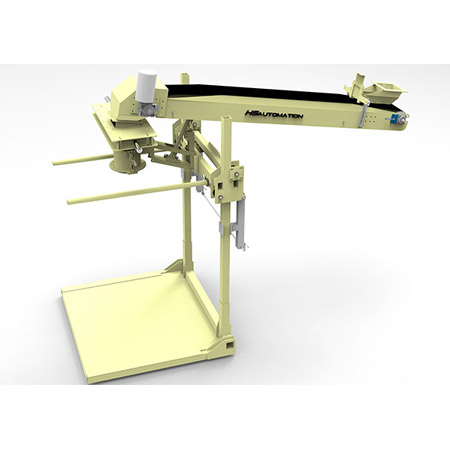
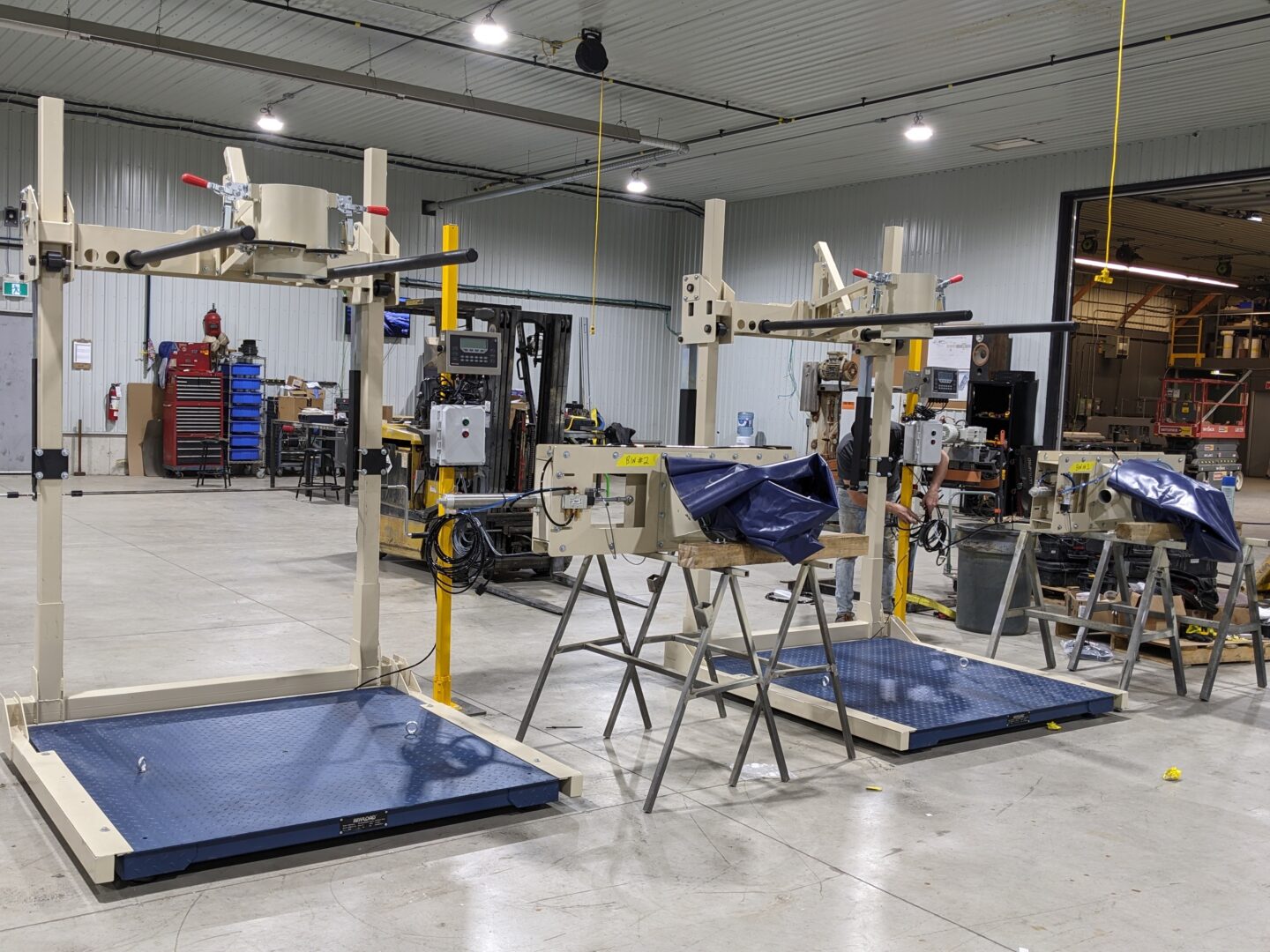
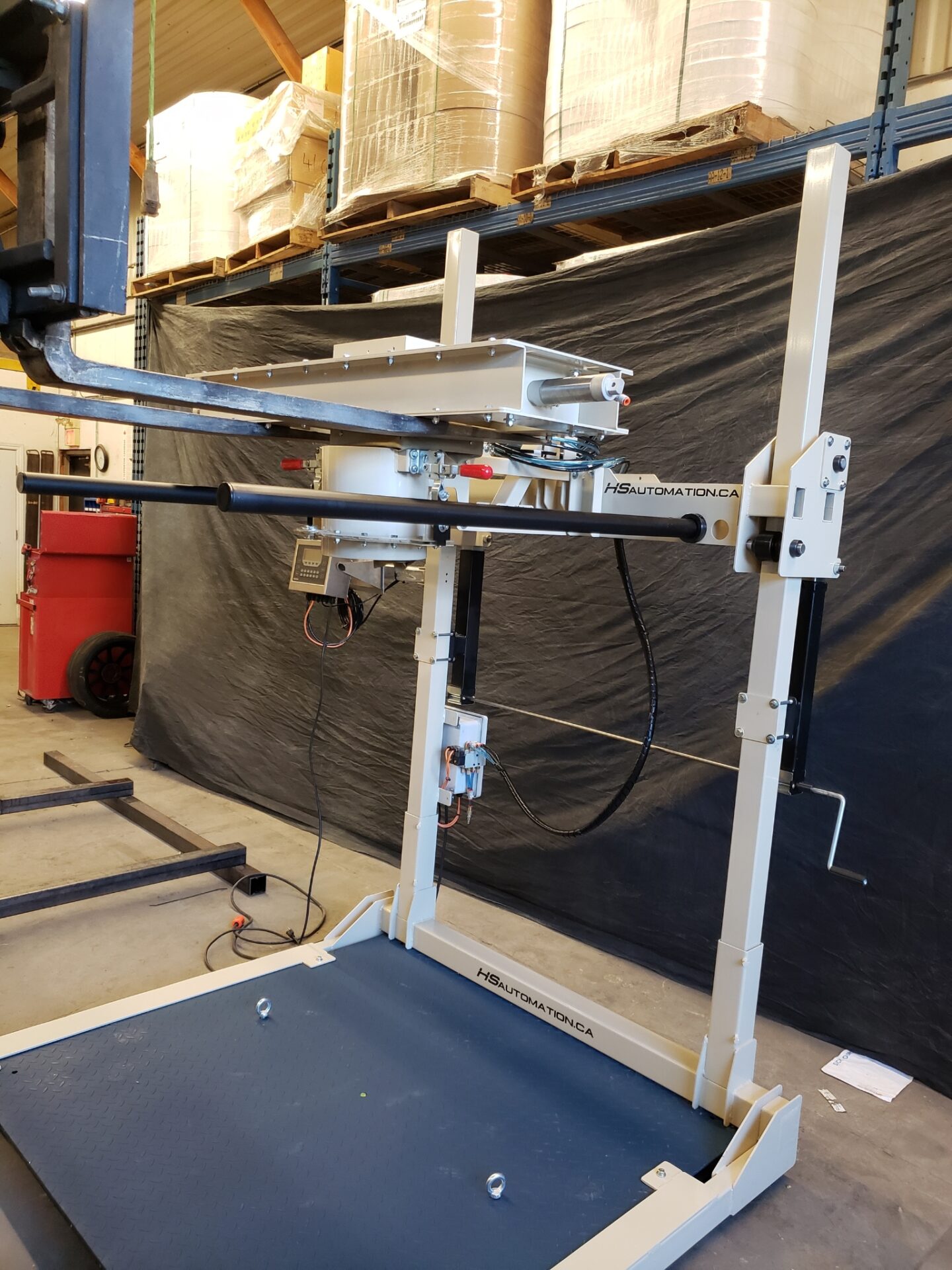
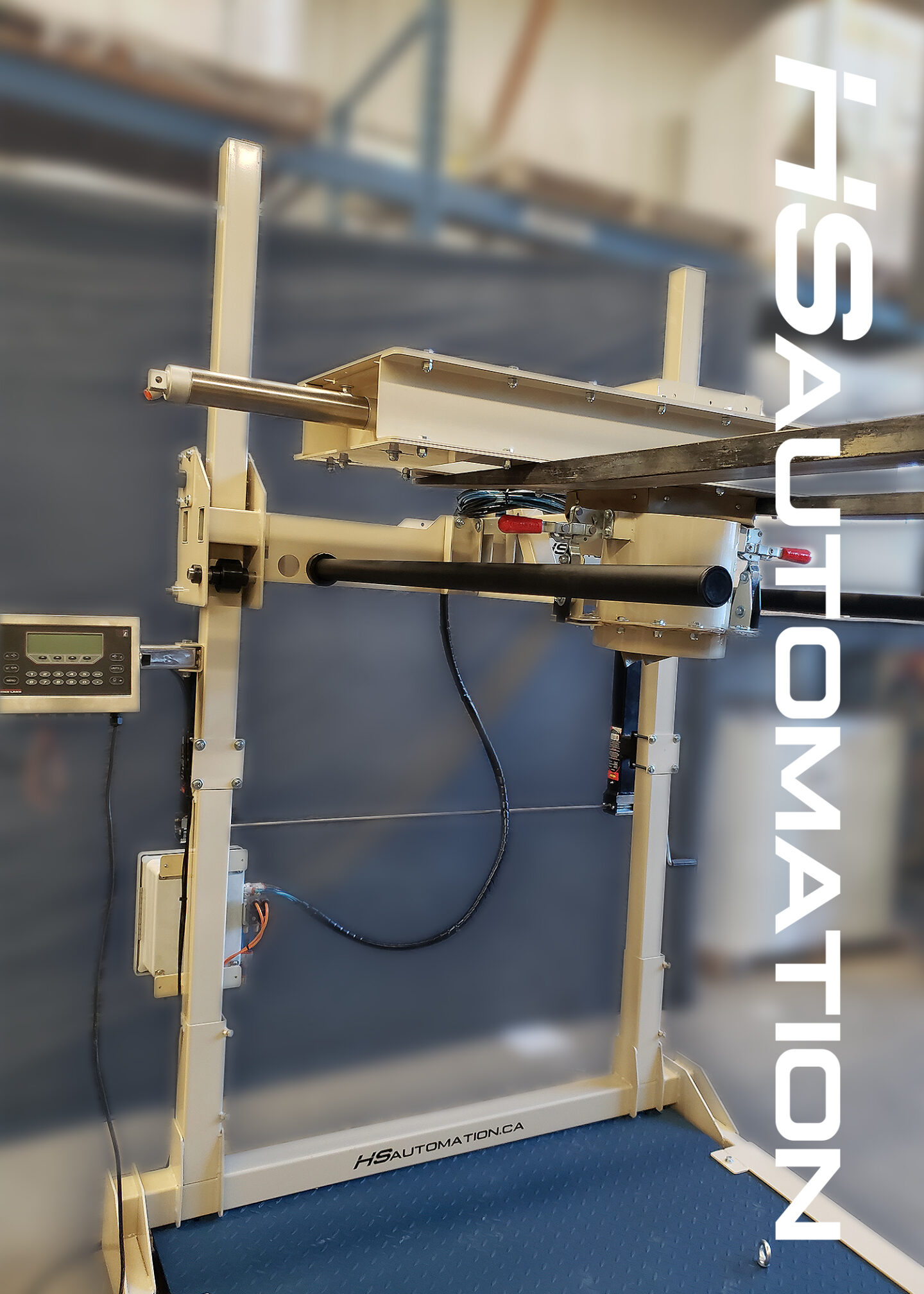
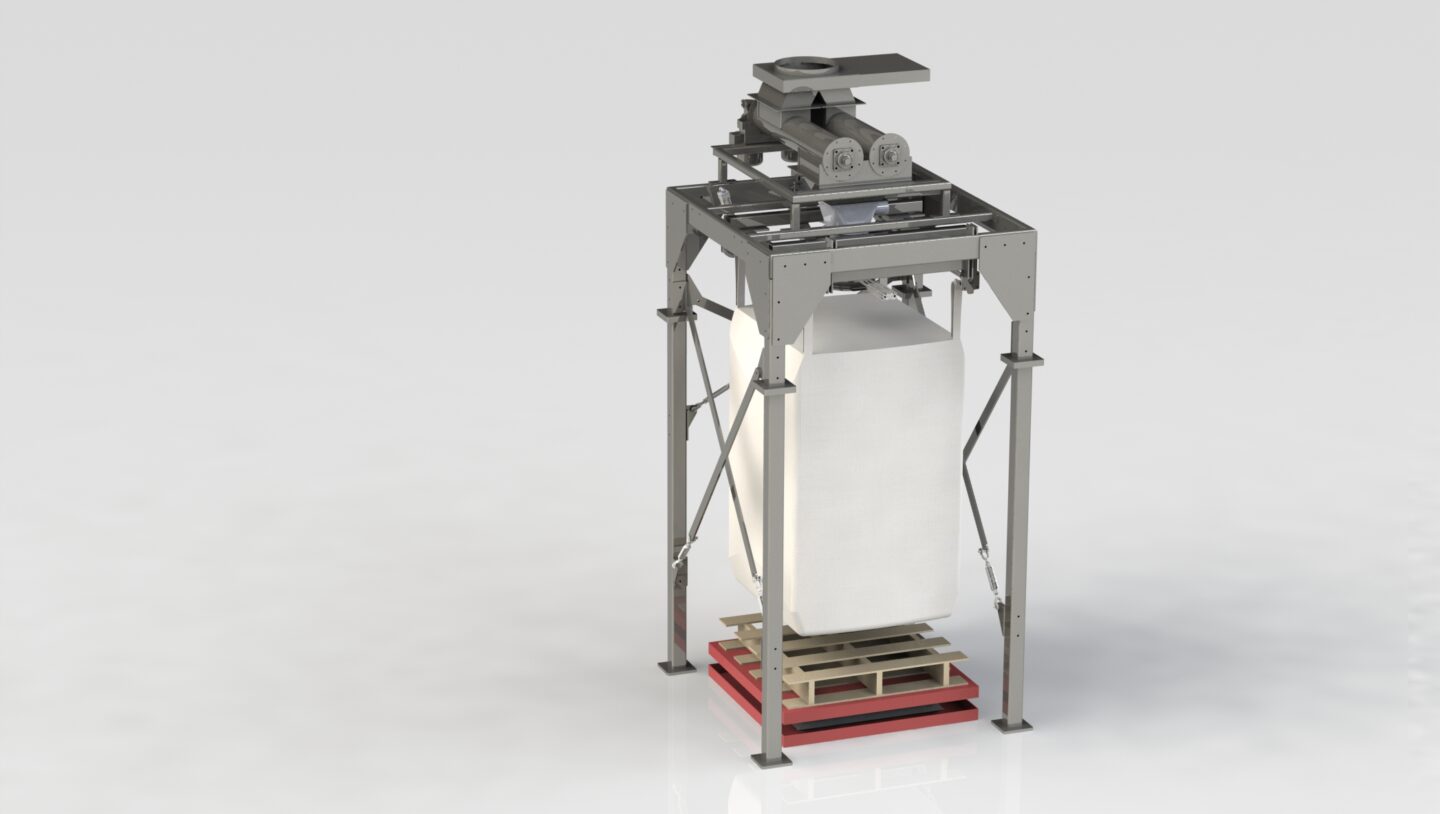
HS Automation designs and builds gross weight tote bag fillers at our shop in Strathroy, Ontario, for filling tote bags, bulk bags and FIBCs. We make two models. The Standard fills granular, free-flowing products by gravity through a two-speed gate, weighing the bag on a floor scale. The HD fills powders and difficult-flowing products with an auger, suspending the bag from overhead load cells so it is held in tension and stretched out as it fills.
Because we build them ourselves, both can be configured around your product, your bag and your building rather than the other way round.
What Is a Gross Weight Tote Bag Filler?
A gross weight tote bag filler is a bulk bag filling station that weighs the container and the product together while filling, rather than weighing product separately and then dropping it. The controller watches the weight climb and stops the fill at target.
This is the opposite of a net weigh system, where product is weighed in a hopper above the bag first. Both are accurate; they suit different operations.
- Gross weigh — simpler, fewer moving parts, lower cost, less headroom needed because there is no weigh hopper above the fill head. Well suited to tote and bulk bags.
- Net weigh — faster on high-speed lines because the next charge is weighed while the current bag fills. Better for small bags at high rates.
For tote and bulk bags, gross weigh is normally the right answer. Bags are large, cycle times run in minutes rather than seconds, and the simplicity pays for itself in uptime. If you run small bags at high speed, see our net weigh systems.
Standard or HD — Which Model Do You Need?
The deciding factor is how your product behaves, not how much of it you fill.
| Standard | HD | |
| Built for | Granular, free-flowing products | Powders and difficult-flowing products |
| Product delivery | Adjustable two-position gravity gate — bulk fill then slow fill | Auger fill, positively metered |
| Weighing | Floor platform scale beneath the bag | Load cells mounted overhead, carrying the full weight of the bag |
| Bag support | Bag sits on the scale deck; the tote bag hooks do not take the full weight | Bag suspended from the top; the four straps take the full weight as it fills |
| Bag stretch | Strap height set by dual jacks (limited weight) | The suspension itself stretches the bag out as it fills |
| Dust control | Spout-in-spout design | Spout-in-spout design |
| Typical products | Seed, grain, feed pellets, fertilizer, resin | Flour, starch, milk powder, premix, fine chemicals, pigments |
In short: if your product pours cleanly out of a gate, the Standard is the simpler and more economical machine. If it bridges, rat-holes, aerates or fluidizes, you need the HD — a gravity gate cannot meter a powder reliably, and no amount of adjustment will make it.
The Standard — Gravity Fill for Granular
Two-position gate for bulk and slow fill. An adjustable two-position gate gives a fast bulk fill and a controlled slow fill for the final approach to target. The dual-cylinder design lets the area of the slow fill opening be changed in the field to suit the material — so a free-flowing resin and a lighter, bridging meal can both be dialed in on the same machine without new parts.
Spout-in-spout design for full dust control. The fill spout sits inside an outer spout so displaced air escapes through the annular space and can be drawn away, rather than blowing product back out around the bag neck. Over-centre clamps seal the bag spout tight to the head. Together they contain dust where bulk bag fillers normally lose it, and the machine connects readily to a dust collection system.
Adjustability.
- Bag strap arms move to suit a range of bag sizes
- Dual heavy-duty jacks set bag strap height so the bag hangs at full stretch, whatever its height
- Filling spout height and centre linkage position the spout for maximum bag filling
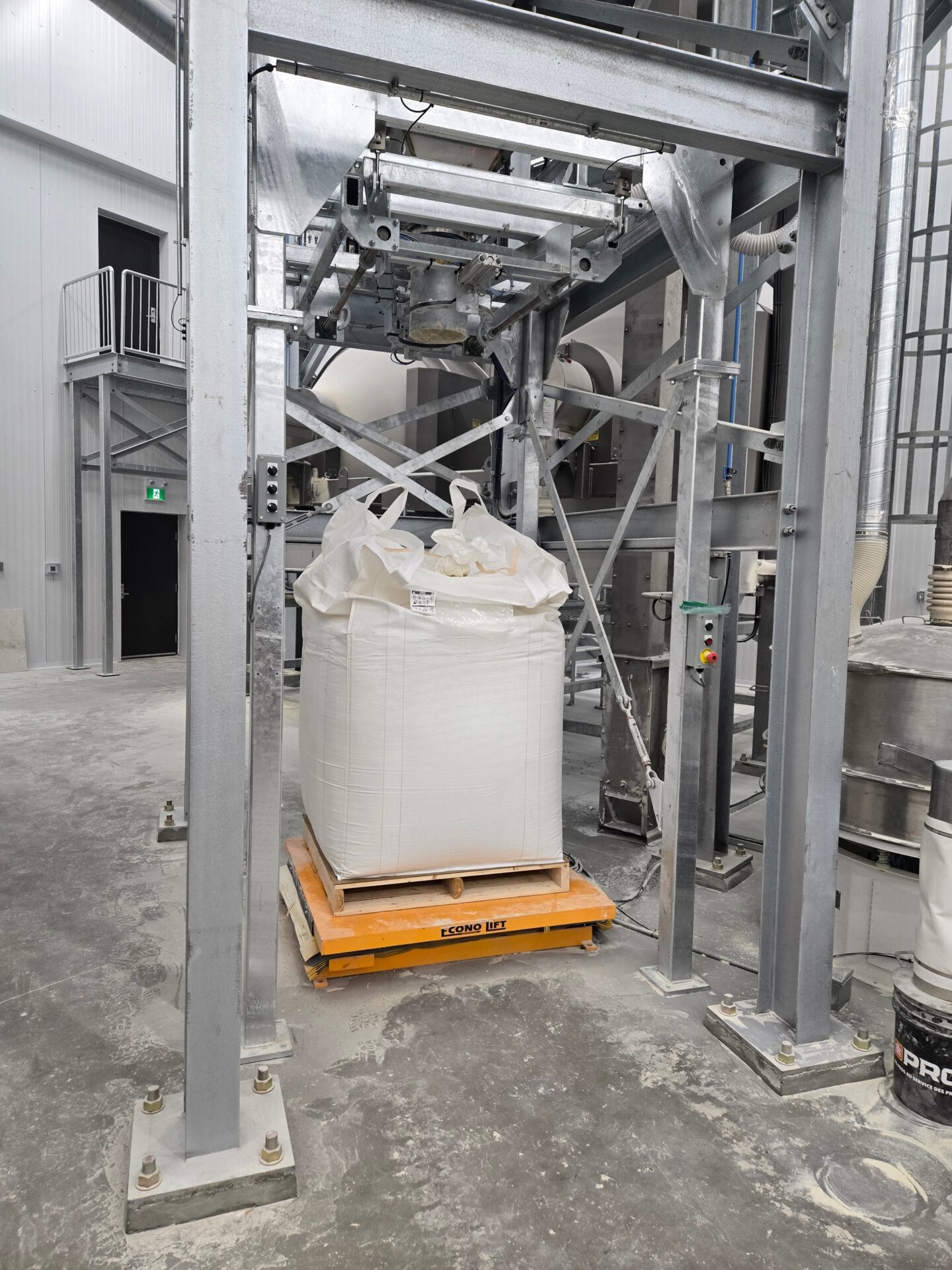
Industrial weighing platform. The Standard runs on a heavy-duty floor scale built for plant conditions:
- Structural steel channel frame with rugged diamond deck safety treadplate
- Four NTEP certified alloy steel shear beam load cells
- Hostile-environment load cell cable
- Stainless steel NEMA Type 4X junction box with signal trim card, side access (option available)
The HD — Auger Fill for Powders
Powders do not behave like granulars. They aerate, bridge over an opening and rat-hole, and the same weight of powder can take up very different volume depending on how much air it is carrying. A gravity gate cannot meter that accurately, and a bag sitting slack on a floor scale will not fill to a square, full shape. The HD is built around both problems.
Dual auger filling for positive, accurate metering. An auger meters powder positively, moving product accurately into the bag instead of letting it run under gravity. The cycle starts with both the bulk and dribble augers running at full speed. Once the bag reaches dribble weight, the bulk auger stops and the dribble auger carries on alone until the tote is full — fine control on the final approach, which is where accuracy on a powder is won or lost. Both augers have flaps that close as soon as the screws stop turning, shutting the flow off completely — valuable with products that fluidize.
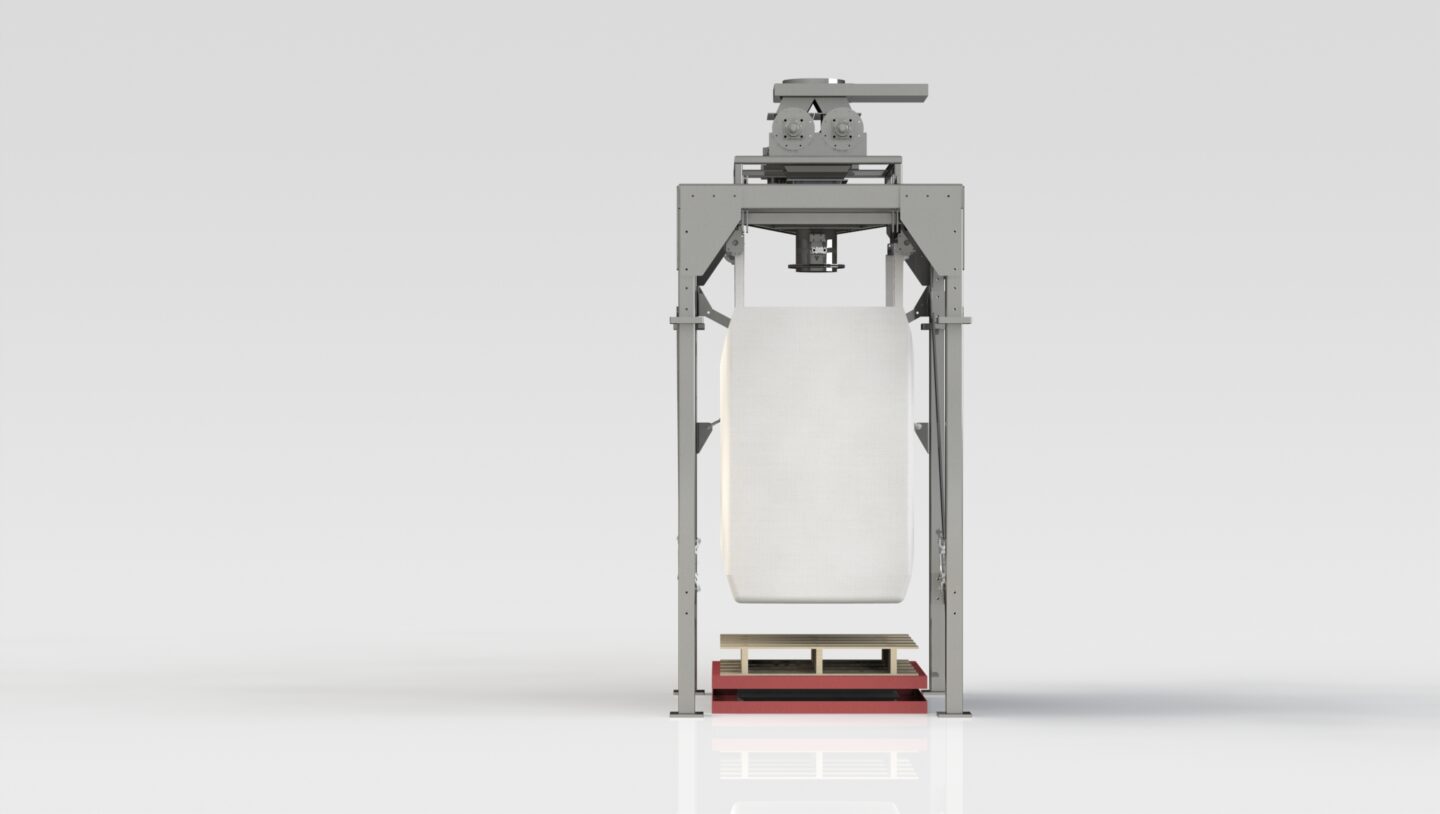
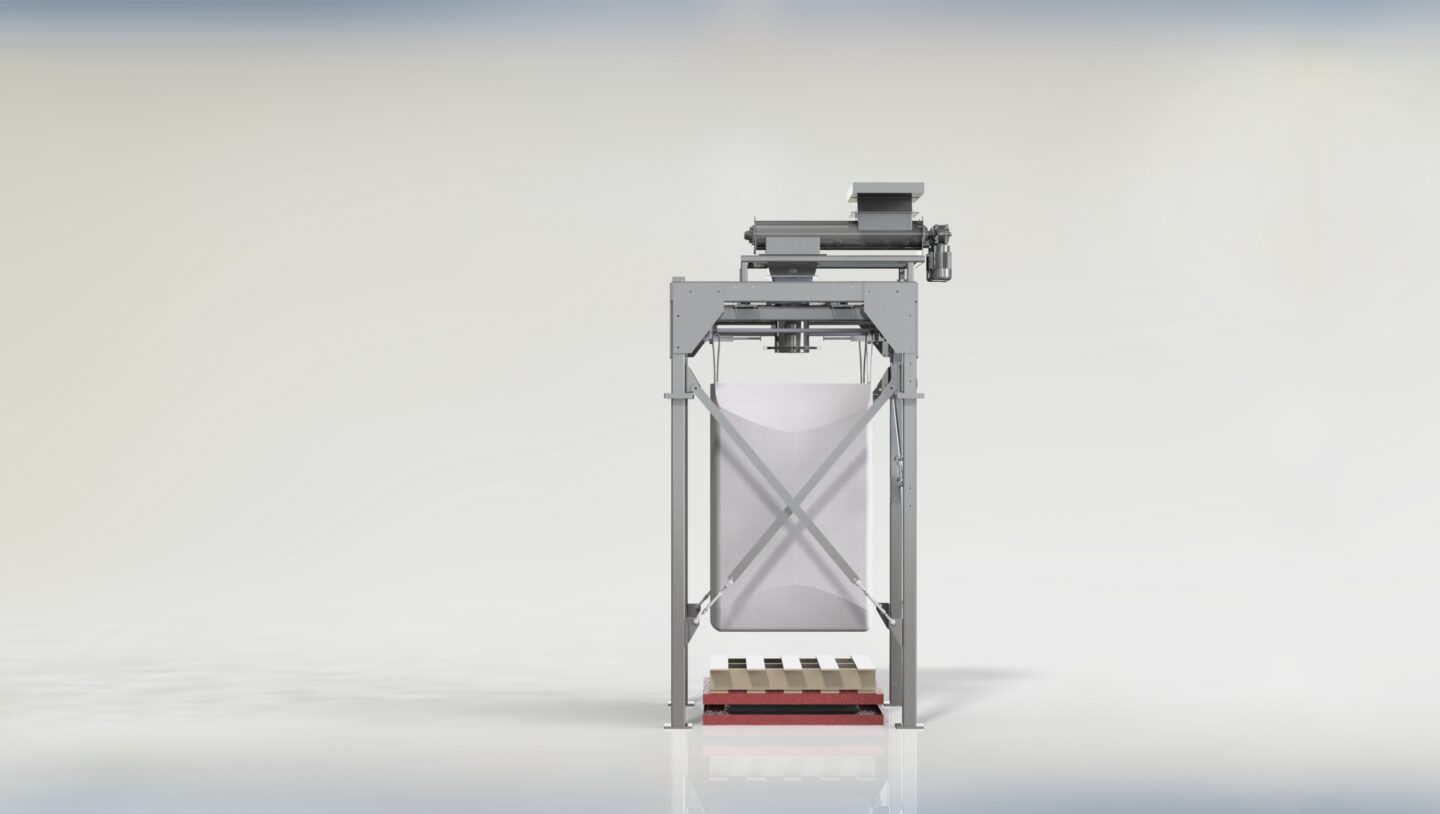
Overhead load cells that carry and stretch the bag. The HD has no platform scale. Load cells mounted above in a framework carry the full weight of the bag, so the bag hangs from the machine rather than standing on it:
- It stretches the bag out as it fills, so a suspended bag fills to a full, square shape instead of slumping — matters most with low-density powders
- A programmable lift table taps the bottom of the bag during filling to maximize the space in the bag corners
- Automatic pneumatic strap release after the bag is filled saves the operator a manual step
Dust control. The HD uses the same spout-in-spout approach as the Standard, which matters more with powders than with granulars to keep the plant clean.
Specifications
Shared specifications across both models. Frame, spout, auger and control details are configured to your product and building — tell us your bag and target weight and we will confirm the exact configuration.
| Fill weight range | 250 kg to 1,050 kg (550–2,315 lb) per bag |
| Bagging rate | Up to 1 bag per minute |
| Bag types | Tote bags, bulk bags, FIBCs, super sacks — fits most standard tote bags |
| Electrical | 120V AC, 5 amps |
| Compressed air | 5 CFM |
| Standard — product delivery | Adjustable two-position gravity gate (bulk fill + slow fill) |
| Standard — weighing | Floor platform scale, four NTEP certified shear beam load cells |
| HD — product delivery | Dual auger fill (bulk + dribble), positively metered with shutoff flaps |
| HD — weighing | Overhead load cells carrying the full weight of the suspended bag |
| HD — bag handling | Programmable lift table, automatic pneumatic strap release |
| Dust control | Spout-in-spout design with over-centre bag clamps, connects to dust collection |
| Options | Weight record printer, legal-for-trade configuration (ask sales) |
| Footprint | 64″ L × 62″ W × 96″ H (height adjustable) |
| Scale platform rating | 5,000 lb |
| Maximum tote size | 48″ × 48″ × 80″ |
| Product feed options | Auger, gravity gate, or belt feeder |
| Legal for trade | Optional — certified Legal for Trade by Measurement Canada |
The Weighing and Control System
The two models use different control architectures, each suited to what the machine has to do.
The Standard is supplied with a dedicated scale controller — a programmable weight indicator with a full operator keypad and programmable soft keys. It runs the fill sequence, holds target weights, and can store and print weight records (printer is an available option).
The HD runs on a PLC with a weight card, so weighing happens inside the same controller that sequences the bulk and dribble augers, the flaps and the lift table. That gives tighter coordination across a more complex fill cycle, recipe storage per product, and a direct path to communicating with other equipment and with your plant network.
We select the indicator and controls to suit your application, and we offer legal-for-trade options — ask the sales team for more information.
Standard — Granular & Free-Flowing
- Seed and grain — soybeans, corn, wheat, pulses, cleaned and treated seed
- Animal feed — pellets, crumbles and coarse meal
- Fertilizer and minerals — granular blends, salt, aggregates
- Plastics — resin pellets and granules
HD — Powders & Difficult-Flowing
- Flour, starch and milled cereal products
- Milk powder and dairy ingredients
- Vitamin and mineral premix
- Spice, seasoning and food powder blends
- Fine chemicals, pigments and mineral powders
Not sure which model your product needs? Send us a sample — we will run it and tell you.
Why Plants Move to a Tote Bag Filling Station
- Accurate weights, every bag. Two-speed gravity filling or positively metered auger filling on a scale means you stop giving product away on overfill and stop taking short-weight complaints.
- Less dust in the building. Spout-in-spout containment and clamped bag necks keep product where it belongs — which matters for housekeeping, air quality and combustible dust exposure.
- One machine for your different bag sizes. Adjustable arms, jacks and spout height mean you are not buying a second station for a second bag size.
- Fewer people on the job. One operator runs the station and moves filled bags with a forklift.
- Better-shaped bags. A bag filled at full stretch stacks squarely and travels without slumping.
Built in Ontario, Supported in Ontario
We design and build both models at our shop in Strathroy. That has practical consequences:
- They can be changed to fit. Frame height, spout size, auger sizing, gate configuration and controls are specified for your product and your building.
- Parts come from us. Cylinders, clamps, augers, load cells and wear parts are supported directly, and typically stocked in house.
- Service is local. Our technicians commission the machine and come back when you need them.
Tell us your product, your bag size and your target weight, and we will configure the right tote bag filling station around them. See our bag filling equipment or contact us today.
Frequently Asked Questions
What is a gross weight tote bag filler?
A gross weight tote bag filler is a bulk bag filling station that weighs the bag and its contents together while filling. The controller stops the fill when the total reaches target weight.
What is the difference between gross weigh and net weigh filling?
Gross weigh systems weigh the bag and product together. Net weigh systems weigh product in a hopper first, then drop it into the bag. Gross weigh is simpler, needs less headroom and costs less; net weigh is faster on high-speed small-bag lines. For tote and bulk bags, gross weigh is normally the better choice.
What is the difference between the Standard and HD tote bag fillers?
The Standard fills granular, free-flowing products by gravity through a two-position gate and weighs the bag on a floor scale. The HD fills powders with an auger and suspends the bag from overhead load cells, which carry the full weight of the bag and hold it stretched out as it fills.
Why do powders need an auger instead of a gravity gate?
Powders aerate, bridge over openings and rat-hole, so they will not flow predictably through a gate. An auger meters positively — the screw moves a known volume per revolution whether or not the material would flow on its own — which keeps fill weights repeatable and gives fine control near target weight.
Why are the load cells mounted above the bag on the HD?
Overhead load cells carry the full weight of the bag, so the bag hangs in tension and is stretched out as it fills. That produces a fuller, squarer bag, which matters most with low-density powders. It also leaves the floor clear beneath the bag, which is an advantage for housekeeping in a powder plant.
Can these machines fill FIBCs and bulk bags as well as tote bags?
Yes. Tote bag, bulk bag, FIBC, super sack and big bag all describe the same type of container. Bag strap arms and strap height are adjustable to suit different bag sizes.
How do the fillers control dust?
A spout-in-spout design lets displaced air escape through an outer spout where it can be extracted, while over-centre clamps seal the bag spout tight to the fill head. Both models can be connected to a dust collection system.
Is a lift table included with the HD?
Yes. The HD is supplied with a lift table that supports the base of the bag and pallet and adjusts height through the fill cycle.
Is the scale certified?
The Standard weighing system uses NTEP certified shear beam load cells, and Canadian versions include corner overload stops and a level bubble. Tell us if you need a legal-for-trade configuration and we will specify accordingly.
Who builds and services the machines?
HS Automation designs, builds and services both models at our facility in Strathroy, Ontario, and supports them across North America.
Contact Us
Phone
519-245-2310