
Gravity Separators in North America
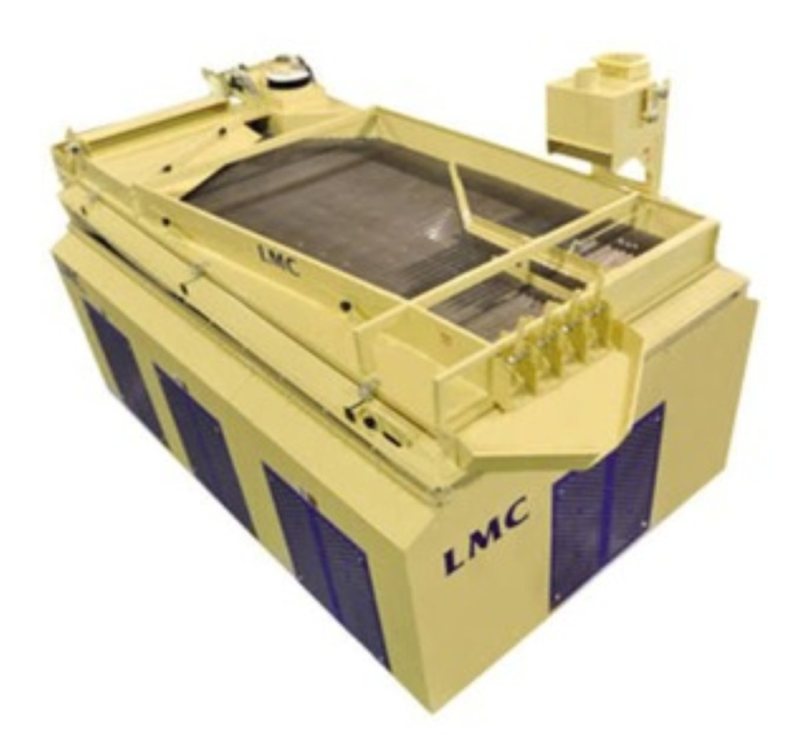
Gravity Separators for Seed, Grain, and Agricultural Processing
HS Automation supplies gravity separators for seed processing, grain handling, bean and pulse processing, and other agricultural applications where density-based upgrading is required. We work with operators to select the right model for their product and throughput, and we integrate gravity separators into complete processing lines where required.
How a Gravity Separator Works
A gravity separator — also called a gravity table or specific gravity separator — separates product based on differences in density (specific gravity) rather than size or shape. It does this through a combination of three forces acting simultaneously on the product bed:
- An upward air stream that passes through a perforated deck and fluidizes the product bed, lifting lighter material off the deck surface
- A reciprocating (vibrating) deck motion that moves denser material uphill toward the heavy discharge end
- A slight lateral and end tilt of the deck that causes lighter, air-suspended material to flow downhill toward the light discharge end
The result is stratification: the product bed separates into distinct layers by density, with the heaviest material riding on the deck surface and migrating uphill, and the lightest material floating on the air cushion and flowing to the low end. Intermediate fractions form across the width of the deck between the two extremes.
Adjustable discharge gates control where each fraction exits the machine. The operator sets the cut points to separate good product from light, deteriorated, damaged, or immature seed and grain — achieving a level of quality upgrading that no size-based cleaning machine can match.
What Gravity Separators Remove
Gravity separators are used when a seed or grain lot contains material that is close in size to good product but differs in density. Common applications include removing:
- Deteriorated and aged seed — lower density due to moisture loss and internal breakdown
- Insect-damaged seed — hollowed or partially consumed kernels that are lighter than sound seed
- Immature or shrunken seed — kernels that did not fill fully and weigh less than mature product
- Cracked and broken kernels — fractured seed with lower density than whole product
- Stones, rocks, and clods — heavier than seed and segregated to the heavy discharge end
- Mouldy or heat-damaged grain — affected kernels with altered density compared to sound grain
- Weed seed that passed air-screen cleaning — when weed seed and crop seed are similar in size but differ in weight
The gravity separator is typically positioned after the air-screen machine in a processing line, working on product that has already been cleaned by size. At that stage, the density separation upgrades germination percentage and purity by removing low-quality seed that earlier machines could not differentiate.
Key Features of the Gravity Separators We Supply
The gravity separators HS Automation supplies are built for precise, reliable, high-throughput performance in commercial processing operations. Key design features include:
- Ripple Deck Design: The textured ripple deck surface gives the deck covering increased traction during the separation process, allowing the machine to make finer, more distinct separations between product fractions. The ripple pattern controls how material migrates across the deck and contributes to cleaner cut points at each discharge gate.
- Automatic Discharge System: A pressure-driven automatic discharge system maintains consistent separation without requiring operators to constantly monitor and manually adjust as product flow rates fluctuate. This is a significant operational advantage in continuous-run processing environments where flow rates vary across the day.
- Deck Recirculation — No Middle Cuts Required: On-deck recirculation eliminates the need for middle cuts entirely. Middle cuts — the intermediate fraction that blends heavy and light material — require additional handling passes to re-separate, which increases product damage and reduces throughput efficiency. The deck recirculation system handles intermediate material within the machine itself, producing clean fractions without blending.
- Adjustable Discharge Gates: Multiple independently adjustable discharge gates give operators precise control over where each fraction exits the machine. Gate positions are set to match the specific density profile of the product being processed, allowing cut points to be dialled in tightly for maximum product recovery and minimum good-seed loss.
- Greater Bed Depth: A greater product bed depth than standard gravity separators allows the machine to use the product mass itself as part of the separation medium. Deeper beds create more distinct stratification layers, enabling more precise separations — particularly useful when processing seed lots with small density differences between good product and contaminants.
- Single High-Efficiency Fan: The fluidized bed is created by a single, quiet, high-efficiency fan. The air volume and pressure are adjustable to match the density and bulk characteristics of different products. A single fan simplifies maintenance and reduces noise levels compared to multi-fan configurations.
- Three-Component Deck System: The deck assembly consists of three components — deck cap, insert, and diffusion plate — designed for easy removal and thorough clean-out between product changeovers. This design is particularly important in food-grade processing operations where cross-contamination between product runs must be prevented. The screens can be changed quickly between products.
- Counterbalanced Construction: The counterbalanced deck design minimizes vibration transmission to the supporting structure and floor, reducing structural load and noise in the processing facility. This also contributes to consistent deck motion, which is critical for repeatable separation performance across production shifts.
Available Options
| Remote Control Panel | Optional remote panel with variable frequency drives for speed adjustment from a distance — useful in large facilities where the operator workstation is not adjacent to the machine |
| Dust Hood | Optional dust containment hood for facilities with dust control requirements or where fine product fractions create airborne dust during processing |
| Stainless Steel Contact Surfaces | Optional stainless steel on all product contact surfaces for applications requiring enhanced corrosion resistance or stricter sanitation standards |
Model Specifications
Five model sizes are available to match the throughput requirements of your operation, from smaller-scale processing lines to high-capacity commercial facilities:
| 500 XL | 5 HP | 20 HP |
| 500 | 3 HP | 15 HP |
| 400 | 3 HP | 10 HP |
| 300 | 3 HP | 7.5 HP |
| 200 | 2 HP | 5 HP |
Gravity Separator Applications by Product
Gravity separators are used across a wide range of seed and grain processing applications. Common products processed on gravity separators include:
- Field crops — soybeans, corn, wheat, barley, oats, canola, and other cereal and oilseed crops
- Edible beans and pulses — navy beans, kidney beans, black beans, lentils, chickpeas, and peas
- Peanuts — removing immature, shrunken, and damaged peanuts from the lot before further processing
- Tree nuts — almonds, walnuts, pecans, and similar products where density variation indicates quality differences
- Vegetable seed — small-seeded crops where fine density separations are required to meet germination standards
- Specialty and high-value seed — crops where maximum product recovery and tight quality specs justify the precision of gravity separation
Where the Gravity Separator Fits in a Processing Line
The gravity separator is not a standalone cleaning machine — it works best as part of a complete processing line, positioned after primary size cleaning has been completed. A typical sequence looks like this:
- Pre-cleaning — removes large trash, sticks, and oversized material before the main line
- Air-screen cleaning — removes inert material, undersized and oversized seed by size and air separation
- Gravity separation — upgrades the size-cleaned lot by removing low-density, damaged, and deteriorated product
- Additional separating equipment — length, shape, or surface-texture separations if required by the crop and quality spec
- Treatment and bagging — fungicide or insecticide application, then weighing and bagging
Placing the gravity separator after air-screen cleaning means it works on a cleaner, more uniform product stream — which improves separation efficiency and reduces wear on the machine. HS Automation can design and supply the complete processing line, including conveyors systems, elevators, bins, and all upstream and downstream equipment.
Get the Right Gravity Separator for Your Operation
Gravity separator performance depends on matching the machine to your product, your throughput, and your quality requirements. HS Automation works with you to select the correct model and configuration, and can integrate it into a complete processing line if required.
Contact us today to discuss your application and get the process started.
Contact Us
Phone
519-245-2310