
How to Choose the Right Automatic Tagger
How to Choose the Right Automatic Tagger
Choosing the right automatic tagger starts with understanding how each system supports speed, accuracy, and long-term dependability in a busy packaging environment. Different products, bag styles, and line layouts require equipment that applies tags with consistent placement and clean attachment. HS Automation builds solutions that center on practical performance, and each automatic machine for tags and labels reflects that approach. The goal is to match your production rate, material type, and handling requirements with a tagger that delivers reliable output every shift. A clear evaluation process helps you select equipment that supports growth, simplifies operation, and maintains consistent packaging quality.
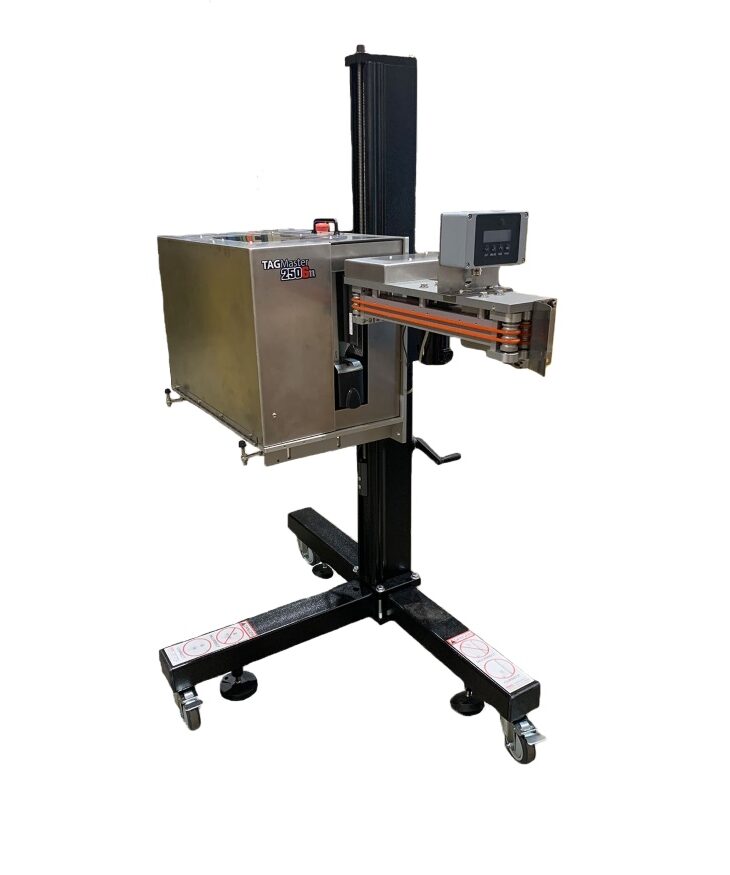
What Is an Automatic Tagger?
An automatic tagger places a printed tag onto the bag as the closing stitcher secures the top. The automatic tag machine feeds each tag with steady, controlled motion, then positions it so the stitcher attaches it cleanly during the closing cycle. This creates a consistent placement that supports clear product tracking and smooth downstream handling. Plants that run paper, poly, or woven bags gain predictable results without slowing production. The system keeps tags aligned, reduces manual steps, and supports accurate identification across every shift. Automatic taggers help maintain organized packaging processes for operations that depend on reliable labeling.
Explore the Two Main Styles of Automatic Taggers
Two main styles of automatic taggers support most bagging and sewing lines, and each design serves a different type of operation. Plants choose between systems that print tags on demand or systems that apply premade tags. Automatic tagging works best when the equipment matches the line speed, bag type, and labeling needs of the facility. A clear understanding of both options helps companies select equipment that supports steady output, clean tag placement, and organized production identification. The list below highlights the two main styles of automatic taggers:
Print, Cut, and Apply Taggers
This style prints tag information directly from a continuous roll, giving the printer control of the paper throughout the full cycle. The steady feed supports a smooth transfer from the tagger to the stitcher with reliable placement on every bag. Operations reduce tag stock inventory because the system prints only what they needed. Plants choose roll widths of 4 or 6 inches and adjust the tag length to meet labeling requirements. Tags can be placed in landscape or portrait orientation, supporting a wide range of layouts. A scanner can also verify each tag as it leaves the stitcher.
Premade Taggers
This style uses precut tags loaded into a magazine for individual application. The system relies on suction cups or traction wheels to pull each tag from the stack and place it into the stitcher path. Consistent separation can be difficult because every tag requires the same hold and pull force for clean release. Changes in paper thickness, humidity, or surface finish can affect the grip on each tag. Production lines that run mixed materials may see variation in how the tag feeds. These systems work well for operations that maintain steady tag formats and a controlled stock environment.
What Industries Use These Systems
Many industries rely on automatic taggers to keep packaged products organized, traceable, and consistent across large production runs. Each sector handles unique materials, yet all benefit from steady tag placement and dependable equipment performance. Operations that produce feed, seed, or mineral blends depend on clear labeling to support accurate inventory control and proper end-use handling. Automatic tagging supports these goals by placing each tag with uniform alignment and reliable attachment. The list below outlines several industries that depend on these systems:
- Animal Feed
- Premix Minerals
- Bird Seed
- Grass Seed
- Soybeans
How to Integrate a Tagger Into Your Sewing Systems
Integrating a tagger into a sewing system begins by understanding how the equipment fits into the overall bagging line. Plants determine whether the automatic tag unit supports a semi-automatic setup or operates within a fully automatic system. Many lines include a sewing infeed with a tag assist feature, which uses spring-loaded rollers to hold the tag firmly and move it toward the stitcher with steady, controlled motion. This prevents the tag from slipping before the stitcher secures it to the bag. Lines that rely on an operator feeding the bag into the sewing head often place the tagger on the back side of the conveyor to give the operator and tagger room to work. Fully automated lines position the tagger on the side of the bag that faces outward on the finished pallet, making the tag easy to read once the pallet is complete.
Why Choose HS Automation
HS Automation gives operations a dependable partner for equipment that supports clear identification and steady output. Each system matches real production needs rather than forcing plants to adapt to rigid designs. Our automatic tag printing machines reflect this approach by delivering accurate placement, clean integration, and options that fit a wide range of bagging lines. Every project receives practical engineering, responsive support, and equipment designed for long-term service. Plants gain a solution that produces product identity and strengthens overall packaging performance.
Automate Your Operation Today
Strong tagging performance depends on equipment that aligns with your bagging line’s flow and supports clear product identification without slowing production. HS Automation designs each system with a focus on long-term reliability, clean integration, and consistent results across every shift. Our team listens to the needs of your operation and builds solutions that support growth, accuracy, and organized material handling. If you handle feed, seed, minerals, or powdered products, we can help you select equipment that delivers dependable performance. Please reach out to our sales engineering team to find the best tagging solutions for you.
Learn How Valve Bag Automation Works
Valve bag automation brings speed, consistency, and control to bag packaging by combining precise filling with…
How Seed Processing Plants Work
Seed quality lies at the foundation of strong yields, and reliable field performance. A modern seed processing plant…